

Welcome to another episode of All Things Dental, brought to you by York Village Dental, your dental experts in York, Maine. On today’s episode, we are debunking common myths about dental implants and unveiling the truth. That’s right, and it’s a topic that really needs clearing up.
Dental implants, they’ve genuinely revolutionized how we handle missing teeth. Absolutely, they offer that kind of permanence, that stability, which, well, wasn’t really possible not that long ago.
Exactly.
But, you know, because it involves surgery, even minor surgery, there are always going to be some fears, some misunderstandings that pop up. And those misconceptions can really stop people, can’t they? Stop them from even thinking about something that could, well, dramatically improve their daily life. So today, that’s our goal for this All Things Dental.
We want to pull back the curtain, you know, cut through that confusion and give you the straight facts. Yeah, give you the accurate picture. We’re looking at insights from a really helpful article by Dr. Ryan G. Smith, DDS.
He does a great job unpacking these exact myths we hear all the time. It’s a great resource. It gets right to the core of people’s anxieties and counters them with the facts, you know, based on today’s clinical reality and all the advancements we’ve seen.
Okay, fantastic. So before we start sort of knocking down these myths one by one, maybe let’s just quickly set the scene. What are dental implants, fundamentally? Good idea.
Yeah. Yeah, baseline first. So basically, a dental implant is the closest thing we have right now to replicating a natural tooth, root and all.
Root and all. Okay. Yeah.
It starts with this small titanium post. Yeah. Think of it almost like, well, a very high-tech screw.
And that gets placed surgically right into your jawbone. This post acts as the new tooth root. Gotcha.
So it’s not just about filling the gap, you see. It’s about replacing that foundation underneath. Precisely.
And this is where the really amazing biology comes in, something called osseointegration. Osseointegration. Yeah.
It means your own bone cells actually grow onto and fuse with the surface of that titanium post. It takes a few months, but it becomes literally locked into your jaw. It creates this incredibly strong, stable foundation, just like a natural tooth root provides.
Okay. So it’s like setting a post in concrete versus just loose soil. You need that anchor.
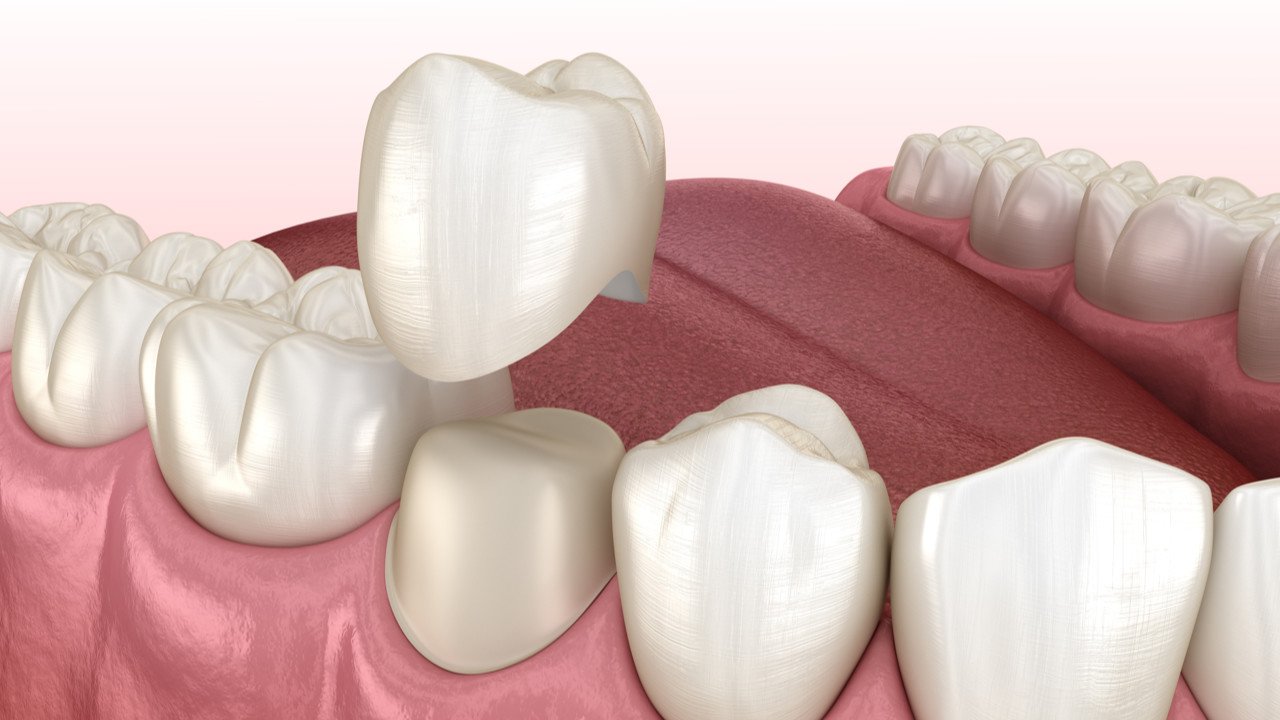
That’s a perfect analogy. And once you have that solid base from osseointegration, that a custom-made crown, that’s the part that looks like the tooth gets attached to the post. Right.
And the result, a replacement tooth that’s strong enough for you to chew normally, speak clearly, smile confidently, just like your other teeth. Makes total sense. Replace the root, get it solid, then put the tooth on top.
Simple concept, amazing tech. Okay. Let’s dive into the myths.
First one, probably the biggest fear. Myth number one, dental implants are painful. Oh yeah.
This is a huge one. And honestly, it often stems from maybe older ideas about dental surgery, perhaps experiences people had years ago. Right.
Things have changed. Massively. Yeah.
The reality today with modern surgical approaches, incredible pain management, sedation options, it’s just far less painful than people tend to imagine. Dr. Smith’s article really stresses this. So we’re not talking agony here.
Absolutely not. With good local anesthesia, most patients report feeling very little, maybe some pressure, but not really pain during the actual placement. The anesthetic blocks that out effectively.
Okay. But what about people with real dental anxiety? Just the thought of it. That’s a very valid concern.
And that’s exactly where sedation dentistry is so helpful. There are different levels from conscious sedation, where you’re awake, but deeply relaxed, maybe even nitrous oxide. Laughing gas.
Right. Laughing gas, or even deeper sedation if needed. The goal is always patient comfort.
Many people using sedation remember very little about the procedure afterwards. Okay. So during sounds manageable.
What about the recovery? Isn’t that the really tough part? Well, you have to expect some discomfort. It is surgery after all, however minor, but patients usually describe it as similar to say, having a tooth removed, not like recovering from major surgery. Okay.
It’s typically well-managed with standard over-the-counter pain relievers, or maybe a short course of prescription medication your dentist provides for the first day or two. And Dr. Smith mentioned something in his article about better imaging, helping with pain. How does that work? Ah, yes.
That’s absolutely key. Using advanced imaging like 3D cone beam CT scans. CBCT scans lets the dentist plan the implant placement incredibly precisely before the surgery.
Like a blueprint. Exactly. A detailed 3D blueprint of your jaw.
Looks, yeah. They can map out the ideal spot, avoid nerves, sinuses, important structures. Yeah.
And often use minimally invasive techniques. Meaning smaller cuts. Smaller incisions, less disruption to the surrounding tissues, which naturally leads to less swelling, less bruising, and yes, less discomfort afterwards.
It’s precision planning for a smoother recovery. Wow. Okay.
That planning aspect makes a huge difference then, really helps bust that pain myth. All right. Let’s shift gears.
Myth number two, dental implants are too expensive. That initial cost, it can look pretty high, can’t it? It definitely can seem that way up front. Yes.
The initial investment is often higher than, say, getting a partial denture or a fixed bridge. Right. But just looking at that initial sticker price, as you called it, well, it really misses the bigger picture.
Dr. Smith makes a compelling case that implants are often more cost-effective in the long run. More cost-effective. So if they start out higher? Because they’re designed, ideally, to be a permanent fix.
With good care, an implant can last for decades, potentially your entire lifetime. Okay. Now compare that.
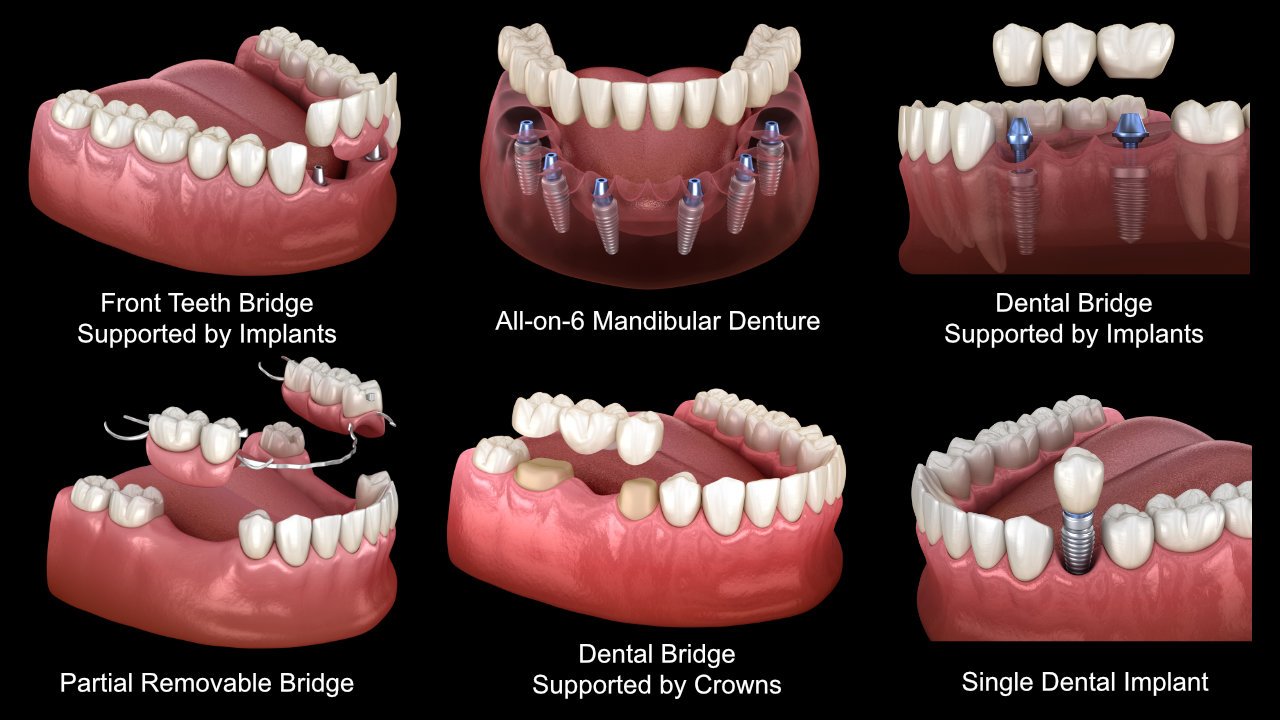
A conventional bridge might last, what, 7 to 15 years on average? Partial dentures often need adjustments, relining, or complete replacement every 5 to 10 years. Ah, I see. So those replacements really add up over time.
They absolutely do. Think about replacing a bridge maybe 3, 4 times over your adult life, plus potential repairs in between. Suddenly, that one-time implant cost starts to look quite different when you consider the total lifetime expense.
That’s a really important perspective. And there are other savings too. Less direct, perhaps.
Implants help preserve your jawbone. When you lose a tooth, the bone underneath starts to shrink because it’s not being stimulated. Implants prevent that bone loss.
This can save you from needing costly bone grafting procedures down the road. And it prevents changes to your facial structure, that kind of sunken look that can happen with bone loss. So preventing future problems is also part of the value equation.
It’s an investment in keeping everything stable. Exactly. Maintaining that crucial foundation.
And look, dentists understand the initial cost is a factor. Many offices offer financing options, payment plans to make it more manageable. That helps.
And it’s always worth checking with your dental insurance. Coverage varies wildly. But sometimes, especially if tooth loss impacts function or causes bone loss, a portion might be covered.
You have to ask. A consultation clarifies all that. Definitely changes the way you think about it from just expensive to a long-term health investment.
Okay, myth number three. Dental implants require extensive maintenance. Sounds like a chore.
Yeah, this one’s pretty far off the mark, actually. Compared to some other options, implants need remarkably little special care. Okay, so what do you have to do? Is it complicated? Special tools? Not really.
Dr. Smith’s article points out, and it’s true, that caring for implants is basically the same as caring for your natural teeth. Just normal brushing and flossing. Pretty much.
Good brushing at least twice a day, flossing once a day, making sure you clean around the base of the implant crown, just like your other teeth. Maybe an antibacterial mouthwash, if your dentist recommends it. And of course, regular dental checkups and professional cleanings.
So just standard good oral hygiene. Exactly. The same things you should be doing anyway for your overall mouth health.
How does that compare to, say, dentures? Oh, it’s much simpler. Dentures need to come out every night for cleaning, soaking. You often need special brushes, soaking solutions, maybe adhesives during the day.
Right, that whole routine. With implants, they stay put. They’re a fixed part of your mouth.
You just brush and floss them along with everything else. No removal, no soaking, no extra steps like that. So they just become part of your regular routine.
Seamless. That’s the idea. Now, it is important to remember, while the implant itself, the titanium in the crown can’t decay, the gums and bone around it can get infected.
It’s called peri-implantitis, like gum disease around an implant. So that daily cleaning is crucial to prevent that and ensure the implant lasts long term. But again, it’s standard hygiene, not some complex, burdensome maintenance.
Got it. Much less intimidating than the myth implies. Okay, moving on.
Myth number four. Dental implants look unnatural. People worry about having a fake tooth look.
And understandably so. But thankfully, this is another area where modern dentistry really shines. The whole process of creating the visible part, the crown, is focused on making it blend seamlessly with your natural teeth.
How do they manage that, make it look so real? It’s a combination of things. First, the materials usually high grade ceramics or porcelain. These can be matched incredibly precisely to the exact shade, the color of your adjacent teeth.
Oh, wow. They even mimic the way natural enamel reflects light, the translucency. Then the shape and size.
The crown is custom milled based on detailed scans or impressions of your mouth. So it replicates the form of the tooth it’s replacing and fits perfectly alongside its neighbors. And the placement itself must be key too, so it doesn’t sit weirdly.
Absolutely critical. That detailed 3D planning we talked about earlier, it ensures the implant post goes in at the perfect angle and position. So when the crown is attached, it lines up correctly with your bite and looks naturally spaced.
So it all works together, color, shape, position. Exactly. When it’s done well by an experienced dentist, honestly, most people, including the patients sometimes, can’t easily tell which tooth is the implant.
They just look, feel, and function like part of a natural smile. That’s the goal, right? Just blend right in. Okay.
Myth five. Dental implants are only for the elderly. Is there an age restriction? This is a really common misunderstanding.
Dr. Smith’s article is clear. Implants can be a great option for people of almost any adult age who are missing teeth. Any age? Well, any adult age generally.
The main thing isn’t the number of candles on your birthday cake. It’s about your overall health and crucially, having enough healthy bone in your jaw to anchor the implant securely. So a younger person, say, in their 20s or 30s who lost a tooth from an accident or something, they could be a candidate.
Absolutely. We place implants quite often for young adults who’ve lost teeth from sports injuries, accidents, maybe congenital issues where a tooth never formed, or even advanced decay. As long as their jaw growth is complete, usually late teens or early 20s, and they meet the health and bone requirements, age itself isn’t the limiter.
What if someone young or old doesn’t have enough bone? Is that it for implants? Not necessarily these days. Dr. Smith touches on this too, bone grafting. If your jaw bone isn’t quite dense or thick enough, a separate procedure can be done to build it up using bone graft material.
It does add an extra step in healing time to the whole process, but it opens the door for implants for many people who otherwise wouldn’t have enough bone support. So it really boils down to the health of the mouth and jaw, not just the person’s age. Precisely.
And actually for younger people, getting an implant sooner rather than later after losing a tooth can be really beneficial. It prevents that bone loss we mentioned and stops the neighboring teeth from drifting into the empty space, which can cause bite problems later on. Good point.
Keeps everything stable for the long haul. Okay. Myth number six, implant surgery is high risk.
People hear surgery and think big risks. How true is that here? Well, any surgery has some potential risk. That’s true.
But implant surgery performed by a skilled clinician using modern techniques is actually considered a very routine and predictable procedure. Dr. Smith highlights it’s exceptionally high success rate. How high are we talking like ballpark? Consistently over 95%.
Some studies show even higher rates like 98%. That’s incredibly successful for any medical or dental procedure. The risks involved are generally minimal.
Over 95%. Wow. What makes it so safe and predictable now? A lot of it comes back to that meticulous planning with 3D imaging we discussed.
Knowing the exact anatomy, planning the precise placement beforehand, minimizes surprises and avoids potential issues. Right. That precision planning again.
Exactly. Plus following the dentist’s instructions carefully, both before and after the surgery, is crucial for smooth healing and minimizing any potential complications like infection, which is rare, but possible. It’s genuinely considered one of the safest bets in modern dentistry.
That’s incredibly reassuring to hear. Such a high success rate. Okay.
Which leads logically perhaps to myth number seven. Anyone can get dental implants. If they’re so safe and successful, does that mean they’re suitable for absolutely everyone missing a tooth? Ah, well, while they are a fantastic solution for a huge number of people, Dr. Smith’s article clarifies that they aren’t quite a universal fix.
There are definitely factors that determine if someone is a good candidate. Okay. So what are the main things a dentist looks for? The absolute essentials are healthy gums, no active severe gum disease, and as we’ve mentioned, sufficient bone volume and density in the jaw to hold that implant securely.
Bone and gums. Got it. What else? Certain systemic health conditions can play a role.
Things like uncontrolled diabetes, some autoimmune disorders, conditions that significantly impair healing, or patients undergoing certain cancer treatments might affect the implant’s ability to integrate or increase risks. Also, habits like heavy smoking are a known risk factor, as smoking constricts blood vessels and can really impede healing. So general health and habits matter significantly.
They do. But, and this is important, having one of these conditions doesn’t automatically rule you out. If a condition like diabetes is well managed, or if a smoker is willing to quit or cut back significantly, implants can often still be very successful.
It requires careful assessment and sometimes coordination with your physician. And the bone issue, you mentioned grafting can sometimes help there.
Yes, exactly.
If bone density is the main hurdle, grafting can often overcome it. So it really highlights why that initial thorough evaluation is so critical. Absolutely.
Dr. Smith emphasizes this. Step one is always a comprehensive checkup with a dentist experienced in implants. They’ll look at your medical history, your dental history, do a full oral exam, take necessary x-rays or a 3D scan.
It works. Right. To really understand your specific situation, assess the bone, the gums, everything.
Only then can they determine if implants are the right choice for you and create a personalized treatment plan. It’s definitely not one size fits all. Makes sense.
A tailored approach for a sophisticated procedure. Okay. Last myth.
Myth number eight, dental implants are not worth the investment. We talked about cost earlier, but let’s circle back to the overall value. Are they worth it? The article strongly argues, and I completely agree based on clinical experience, that the benefits make them an incredibly worthwhile investment for the right candidates.
Okay. Lay out that value case again. Well, first, as we said, they’re intended as a permanent solution, potentially lasting a lifetime, avoids the cost and hassle of repeated replacements needed for other options.
That’s huge long-term value right there. The longevity factor. Yes.
But beyond that, they restore function completely. You can eat whatever you want, comfortably and efficiently. You can speak clearly without worrying about anything slipping.
You can smile without reservation. That confidence must be priceless. It truly is.
Then there are the health benefits, preserving the jawbone, maintaining facial structure, preventing teeth shifting. And unlike bridges, they don’t require altering, grinding down healthy adjacent teeth. That preserves your natural tooth structure.
Good point. Protects the neighbors. So you’re investing in function, appearance, long-term oral health, and your own confidence and quality of life.
When you weigh all the chewing, the speaking, the smiling, the health preservation against the initial cost, especially compared to the limitations and recurring costs of alternatives, the value proposition becomes very clear. It really shifts the perspective. So summarizing those key benefits, they look, feel, and function just like your own teeth.
]
Allowing confident eating, speaking, smiling. They preserve that critical jawbone, maintaining facial structure. Yep.
Prevents that sunken look over time. They don’t require damaging adjacent healthy teeth. Unlike traditional bridges.
And they have the potential to last a lifetime with proper care. Exactly. All things that directly impact your day-to-day life and your health for years to come.
Which really brings it all back to that starting point, the need for a proper consultation. Getting that individual evaluation, looking at your specific mouth, your bone, your health. That’s the only way to know if implants are truly the best path for you.
It’s all about finding the right solution for your individual needs, your anatomy, your goals for your dental health. Personalized care is key. Absolutely.
So as we finish up today, maybe something to think about is this. How do you view your dental care? Is it just fixing problems as they pop up? Or could you see it as making a proactive, long-term investment in your overall well-being, your comfort, your confidence every single day? For many, implants represent exactly that kind of investment. That’s a great way to frame it.
A real investment in yourself. For more information, be sure to visit York Village Dental’s website at yorkvillagedental.com and to call them at 207-363-6551 to book your appointment for a free consultation. You’ll be glad you did.
Definitely worth exploring your options with the experts. Thank you for joining us for today’s conversation on unveiling the truth about dental implants and debunking common myths. Hope you enjoyed it and that we will see you again for our next fun All Things Dental.
Until next time, stay safe and stay healthy. Goodbye, folks.
Call to Book Your Appointment Today
York Village Dental – Where Beautiful Smiles Begin